Challenges of Aging and Healthcare in Rural Wyoming
Challenges of Aging and Healthcare in Rural Wyoming
This past week has been a whirlwind of healthcare and medical discussions. From our local living rooms to the state capitol, the themes remain exactly the same: access to care, soaring costs, low reimbursement rates, workforce shortages, and a lack of attainable housing.
If we want Wyoming seniors to thrive, we have to look at the entire ecosystem of care. Here is what that looks like on the ground right now.
- Safety at Home: Elevating Our Emergency Services
According to AARP, 80% of older adults want to age in their own homes and communities. To make that a safe reality, we need robust, modern emergency medical services.
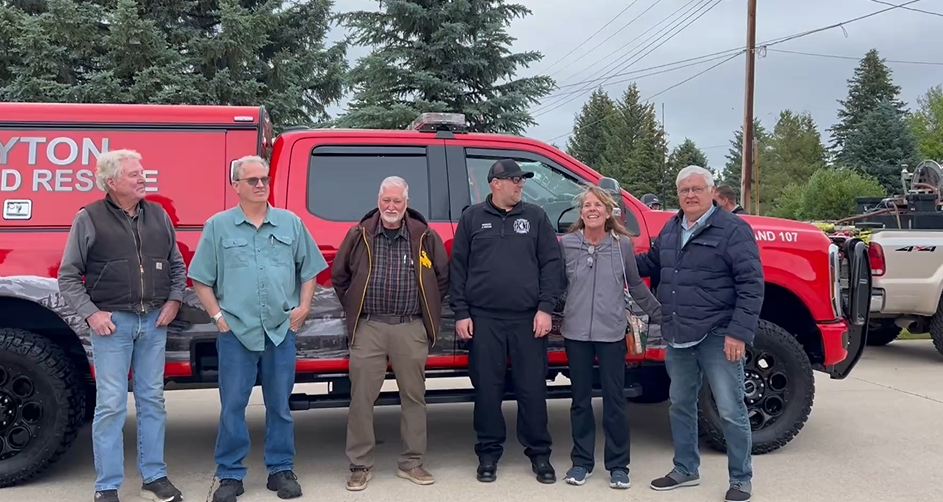
On Wednesday, June 10, I had the privilege of joining the Dayton Town Council and local volunteer firefighters for a great local tradition. Together, we ceremoniously pushed the Dayton Fire District’s brand-new command center and rescue truck into the station.
Replacing an aging 1999 Ford F-250, this new vehicle delivers modern emergency response capabilities to Dayton, the surrounding area, and the neighboring Big Horn Mountains. The district also operates a First Responder Ambulance alongside Sheridan County’s 911 Ambulance Service—a vital lifeline for keeping our aging neighbors safe at home.
- Bridging the Gap: Transitional Care & Workforce Shortages
Sometimes, aging at home requires a stepping stone. On Monday, June 8, I toured the Sheridan Memorial Hospital’s new Transitional Care Unit (TCU) at Green House Living.
With cozy, home-like environments, these rooms are designed for patients who have been discharged from the hospital but aren’t quite ready to be fully independent at home. This service is incredibly close to my heart; both my mother and my husband spent time in the TCU between hospital visits and returning home, giving our family time to make vital modifications like installing wheelchair ramps.
But while visiting with SMH supervisors, the conversation quickly shifted to a familiar hurdle: workforce scarcity and skyrocketing housing prices.
We desperately need Certified Nursing Assistants (CNAs) and support healthcare workers, but the upfront cost of training stops many great local candidates from enrolling.
- My Commitment: I will fight to continue funding the Wyoming Works scholarship program. Because healthcare support roles are “Critical Careers,” I support state financial assistance covering up to 100% of their training costs. By investing in our workforce, we directly invest in the independence of our seniors.
- The State Level: The Healthcare Math Just Doesn’t Work
The conversation expanded statewide at the Wyoming Healthcare Policy Summit in Laramie. Beth Worthen, CEO of the Natrona Collective Health Trust, shared a sobering statistic: healthcare availability and costs are now top-of-mind concerns for 81% of Wyoming voters.
Our rural hospitals face low patient volumes, high fixed costs, and a growing mortality gap. But the ultimate culprit is the reimbursement gap. Mike McCafferty broke down the stark reality of the payor mix for Sheridan Memorial Hospital:
- Medicare (60% of patients): Only reimburses about 75 cents for every dollar of actual hospital expense.
- Medicaid (6% of patients): Reimburses at an even lower rate. (Alarmingly, nearly 2/3 of Wyoming’s skilled nursing residents rely on Medicaid).
- Commercial Insurance (29% of patients): The only category where payments actually and reliably cover real costs.
- Self-Pay (5% of patients): Charged to cover real costs but highly unpredictable and difficult to collect.
As Wyoming’s population ages, and it is aging at an alarming rate, more patients shift from commercial insurance to Medicare. The financial math simply does not work long-term, and hospitals are struggling to keep their doors open.
Looking to 2027: Will Our Lawmakers Step Up?
The federal government recently authorized a massive $50 billion program to stabilize rural healthcare, Rural Health Transformation Program, with Wyoming approved for $205 million in Year 1 (with grant opportunities coming July 1, 2026). While this is a massive five-year boost, it is not a permanent fix.
Federal regulators rejected Wyoming’s request for a permanent “perpetuity fund”. While our legislature authorized a state-level Perpetuity Fund via HB0122, they left it completely unfunded.
Furthermore, during the 2026 session, critical Medicaid reimbursement bills failed to even get enough votes for introduction:
- House Bill 0063: Would have bumped Medicaid reimbursements to nursing homes by 5%.
- House Bill 0064: Aimed to boost Medicaid rates for crucial maternal services in rural and frontier areas.
Every policy discussion in Wyoming must focus on how we care for our most vulnerable seniors and how we retain the young families who care for them. Ensuring that our healthcare systems are modernized and sustainably funded is up to the Legislature working alongside Wyoming’s health care providers.
If I have the privilege of representing House District 51 in the Wyoming Legislature, I promise to make stabilizing healthcare one of my absolute top priorities.